
Flood cleanup and drying
Flood Damage Restoration
Call us for flood damage restoration in Los Angeles.
Flood cleanup and drying
Call us for flood damage restoration in Los Angeles.
Flood damage can overwhelm a property quickly. Storm water, roof leaks, drain backups, appliance failures, and broken plumbing can leave standing water across floors and inside building materials. The longer flooding sits, the more likely it is to damage drywall, flooring, cabinets, trim, contents, and structural materials.
Los Angeles Water Damage provides flood damage restoration for residential and commercial properties in Los Angeles, CA. Call us for fast water extraction, cleanup, drying, sanitation, and repair planning after flooding.
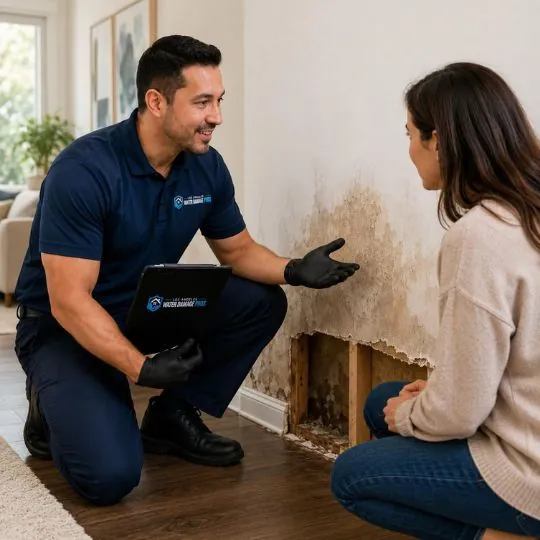
Flood damage restoration starts with safety. Flooding may involve contaminated water, electrical risks, slippery surfaces, and weakened materials. Our team inspects the property, identifies the source of the water, and determines which affected areas need extraction, removal, cleaning, drying, or repair. Once the area is safe to work in, we extract standing water and begin damage cleanup. Wet materials are assessed carefully. Some may be dried, while others may require removal due to contamination, swelling, delamination, or mold risk. Dehumidification and structural drying are used to bring the building back toward safe moisture levels. Flood damage can also involve insurance questions. Some situations fall under standard water damage coverage, while outside flooding may require flood insurance. We provide documentation and clear communication so you have a better understanding of the restoration process and the next steps needed to restore your home or business.
We extract standing water to reduce damage and begin the recovery process.
We remove debris, damaged materials, and wet items that can hold moisture or contamination.
We use drying equipment to dry structural materials after flooding.
We clean affected areas based on the water source and contamination concerns.
We help outline repair needs after flood damage cleanup and drying are complete.
Flood losses differ from plumbing losses in two ways that matter enormously: the water is contaminated, and your homeowners policy probably does not cover it.
Start with the coverage point, because it catches people out. Standard homeowners policies in California exclude flooding, meaning water that reaches the building from outside, whether from storm runoff, a swollen channel, or rising surface water. Cover for that comes from a separate flood policy, most commonly through the National Flood Insurance Program. A burst pipe inside your wall and six inches of storm water across your floor are, as far as your policy is concerned, unrelated events.
The second difference is contamination. Water that has crossed ground picks up whatever was on it: sewage from overwhelmed lines, petrochemicals from roads, pesticides from landscaping, and silt. That makes it Category 3 by definition, which means porous material in the affected area comes out regardless of how it looks, and the space is cleaned and disinfected rather than simply dried.
Common across LA multi-unit buildings and a natural collection point. They flood from the outside in, and standing water there affects the structure and units above it.
Hillsides stripped by fire shed water rather than absorbing it, and the resulting flow carries debris and mud. Properties downslope can flood in rainfall that would previously have been unremarkable.
A long dry season leaves defects undetected, then a concentrated storm arrives. Flat and low-slope roofs across the city are particularly unforgiving of ponding.
Overwhelmed lines push water back into the lowest fixtures in a building. This is Category 3 from the first second and is handled as a biohazard throughout.
Unlike a plumbing loss, flood water leaves solids behind. Removal and disposal of that material is a separate task before drying can begin at all.
Flood claims are scrutinised harder than plumbing claims. Photograph the high-water mark, the source, and every affected item before anything is moved.
If the flooding originated from a public water main or a municipal system rather than natural runoff, that is a different claim route again, usually through the responsible utility rather than your insurer. Establish the source early, because it determines who you are dealing with for the next several months.
| Service | Estimated Cost | Average |
|---|---|---|
| Small flood cleanup | $1,000 to $3,500 | $2,000 |
| Flood water extraction | $1,500 to $6,000 | $3,000 |
| Drying and sanitation | $2,500 to $10,000 | $5,500 |
| Flood damage repairs | $3,000 to $25,000 plus | $9,500 |
| Large flood restoration | $10,000 to $50,000 plus | $22,000 |
Flood damage pricing depends on water depth, contamination, square footage, materials affected, drying time, demolition needs, repair scope, and insurance requirements.
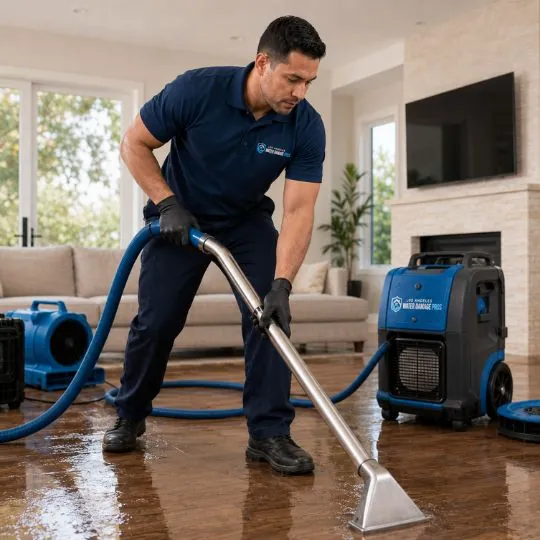
We understand how quickly flood water spreads and how to prioritize extraction, drying, cleanup, and repairs.
Flooding may involve dirty or unsafe water, so cleanup decisions are made with safety in mind.
We look beyond the water line to moisture, materials, contents, odor, mold growth, and repair needs.
We explain each step so you know what is happening and why it matters.
Generally no. Standard California homeowners policies exclude flood, meaning water reaching the building from outside. That requires separate flood coverage, most commonly through the National Flood Insurance Program. Policies may still cover sudden internal water events such as a burst pipe, so the source of the water determines which policy, if any, responds.
It depends on your property rather than on the region's reputation for dry weather. Proximity to a channel or wash, position at the bottom of a slope, a subterranean garage, and being downslope of a recent burn area all raise exposure. Check your flood zone designation, and note that policies commonly have a waiting period before they take effect, so it is not something to arrange once rain is forecast.
Because it has crossed ground before entering the building and carries whatever was there: sewage from overwhelmed lines, road runoff, landscaping chemicals, and silt. Contamination is assumed rather than tested for. That classification drives the handling, meaning porous materials come out, the area is contained, and surfaces are disinfected rather than just dried.
Water is pumped out, silt and debris removed, then the space is cleaned and dried, which takes longer than an above-ground room because there is no natural ventilation and concrete releases moisture slowly. Electrical systems, lifts, and mechanical plant at that level need inspection before being returned to service. Units directly above often need checking too.
Rarely in the flooded zone. Category 3 water wicks up inside the board and contaminates the paper facing and any insulation behind it. Standard practice is to cut out drywall to a defined height above the visible water line, typically a foot or two, so the cavity can be cleaned and dried properly. Drying flood-soaked drywall in place is not a real option.
Significantly, and for years afterward. Vegetation loss and soil changes mean hillsides shed water instead of absorbing it, so rainfall that would previously have soaked in runs off instead, carrying mud and debris. Properties downslope of a recent burn area can flood in storms that never caused a problem before, which catches long-term residents out.
Vehicles are covered under comprehensive auto coverage rather than your property policy, and that is a separate claim with a separate adjuster. Personal contents are handled under your flood policy if you have one, and coverage for contents is often a separate limit from the building itself. Photograph and inventory everything before it is moved or discarded.
For a contained Category 3 loss in part of a property, often one to two weeks before the affected area is cleaned, dried, and verified, with reconstruction following. For a whole-floor flood, expect considerably longer. The mitigation phase alone typically runs five to ten days on flood losses because of the removal and disinfection work that precedes drying.
For flood damage restoration in Los Angeles, call Los Angeles Water Damage now.
Quick, simple, and no obligation
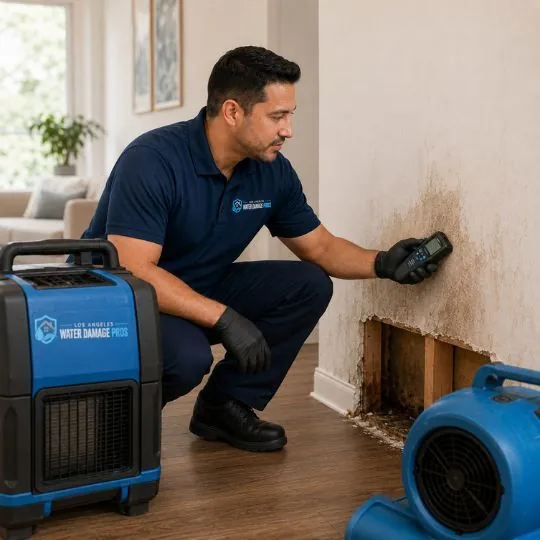
We check water source, contamination concerns, electrical risks, and affected areas.
We extract standing water and remove excess water as quickly as possible.
We remove wet debris and damaged materials that cannot be safely restored.
We dry the structure, clean affected surfaces, and monitor moisture levels.
We help plan the repairs needed to restore your property after flood damage.