
Repair after water damage
Water Damage Repair
Call us to request water damage repair help in Los Angeles.
Repair after water damage
Call us to request water damage repair help in Los Angeles.
Water damage repair should begin only after the property is properly dry. Painting over damp drywall, replacing flooring too soon, or covering hidden water can create bigger problems later. The right repair plan starts with moisture inspection, drying, cleanup, and a clear understanding of what materials are safe to keep.
Los Angeles Water Damage helps homeowners and businesses repair damage from burst pipes, water leaks, appliance overflows, roof leaks, and flooding. Call us for help assessing damage, drying affected materials, and planning repair work after water damage.

Water damage repair can be simple or complex depending on how far moisture spread. A small leak may require baseboard replacement, drywall patching, paint, and minor flooring work. A larger water intrusion can affect cabinets, subflooring, insulation, ceilings, trim, framing, and electrical areas. Before repair begins, we focus on drying and documentation. Moisture readings help confirm whether materials are dry enough to rebuild. If damaged drywall, carpet, insulation, or flooring cannot be saved, we explain why removal is recommended and how that affects the repair scope. Our repair guidance is designed to help restore your home or business without unnecessary confusion. We can help coordinate repair priorities, support insurance documentation, and make sure the repair plan follows the actual damage, not guesswork. Good repairs depend on good drying, and that is where our restoration background matters.
We help address damaged drywall after leaks, saturation, removal, or necessary flood cuts.
We assess moisture in flooring and subfloor areas before replacement or repair decisions are made.
Wet baseboards and trim can swell, separate, or trap moisture, so we check them carefully.
We inspect cabinets and built-ins for swelling, trapped moisture, and repair or replacement needs.
We organize photos, moisture readings, and scope information that may help with the claims process.
Repair is the visible half of the job and the half people budget for. It is also the half that cannot start until the readings say the structure is dry.
Reconstruction puts back what mitigation took out: drywall and texture, insulation, baseboard and trim, flooring, cabinetry, doors, and paint. The sequence matters and it is not negotiable. Closing a wall before the framing behind it has reached its target moisture content seals moisture into the assembly, and that is how a clean water loss becomes a mold problem two months later.
Repair is quoted separately from drying for good reason. Mitigation is urgent and priced on equipment days and affected area; reconstruction is priced on materials and trade labour. Insurers treat them as separate components, and keeping them separate on your paperwork makes it much easier to see what you are being charged for.
Paint fades, flooring gets discontinued, and texture is applied by hand. Perfect matching is often not achievable in a partial repair, and your policy may or may not cover extending work into undamaged areas for uniformity.
Structural work, plumbing changes, and electrical alterations generally require permits. Like-for-like finish replacement often does not. Confirm who is pulling them and get it in writing.
Much of the LA housing stock predates the asbestos and lead rules. Survey before demolition, not after, because discovery mid-job halts everything and costs far more than testing would have.
Most claims are priced in industry estimating software using regional unit costs. It is a common language between contractor and adjuster, which is useful, but the line items are still negotiable.
Insurers often pay actual cash value first and release the remaining recoverable depreciation once work is completed and invoiced. Budget for that timing rather than being surprised by it.
Rebuild starts when the final moisture readings meet target. Any contractor willing to close walls before that has prioritised their schedule over your building.
| Service | Estimated Cost | Average |
|---|---|---|
| Minor drywall repair | $300 to $1,500 | $850 |
| Baseboard and trim repair | $250 to $1,200 | $650 |
| Flooring repair | $800 to $7,500 | $2,800 |
| Cabinet repair or replacement | $1,000 to $10,000 plus | $4,000 |
| Full room restoration repair | $2,500 to $15,000 plus | $6,500 |
Repair costs depend on the materials affected, the extent of the damage, labor, drying requirements, and whether hidden moisture or mold damage is present.
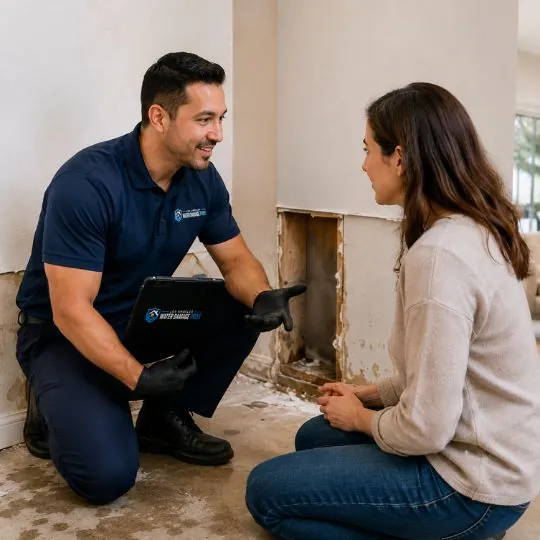
We put drying first so repairs are not placed over damp materials.
We explain what is urgent, what can wait, and what should be replaced for safety and durability.
Our repair recommendations come from moisture readings and restoration experience, not surface appearance alone.
We help gather the details your insurance company may request during a water damage claim.
Replacing what was removed: drywall and texture, insulation, baseboard and trim, flooring, cabinetry, doors, and paint. It may also include plumbing repair where the failure originated, and electrical work where water reached circuits. It begins only after final moisture readings confirm the structure has reached its drying target.
Different work, different pricing basis, different timing. Mitigation is priced on affected area and equipment days and starts immediately. Reconstruction is priced on materials and trade labour and is scheduled afterward. Insurers commonly treat them as distinct claim components, and separate line items make an inflated scope much easier to spot.
Often, depending on scope. Like-for-like replacement of finishes frequently does not require one, while structural work, plumbing alterations, and electrical changes generally do. In California a state contractor licence is required for work of $500 or more. Confirm who is responsible for permits before work begins and get it in writing.
Not always perfectly, and it is better to know that upfront. Paint fades with time, flooring lines get discontinued, and wall texture is applied by hand so it varies between applications. Whether your policy pays to extend work into undamaged areas for a uniform result depends on the policy language, so ask early rather than at the end.
Anywhere from a few days for a single room of drywall and paint to several weeks where flooring, cabinetry, and multiple trades are involved. Material lead times often matter more than labour, particularly for flooring and cabinetry. Ask for the schedule in writing along with what is on order and when it is expected.
Sometimes, but understand the consequences first. If your mortgage lender is named on the check, they typically control disbursement and require proof of completion. Your policy may pay actual cash value now with recoverable depreciation released only once work is done and invoiced, so keeping the first check can mean forfeiting the rest. And unlicensed work on your own home creates disclosure issues at resale.
The difference between what your damaged property was worth at the time of the loss and what it costs to replace new. On a replacement cost policy, the insurer often pays the depreciated amount first and releases the remainder once the work is finished and documented. It is not lost money; it is money released on completion, which affects cash flow during the job.
Survey before any demolition. Buildings from before 1980 may contain asbestos in floor tile, adhesives, insulation, and texture coatings, and lead in paint. Those materials are only a hazard when disturbed, which is exactly what water damage repair does. Discovering it partway through a job stops the work and costs considerably more than testing first.
For water damage repair in Los Angeles, call us and speak with Los Angeles Water Damage today.
Quick, simple, and no obligation
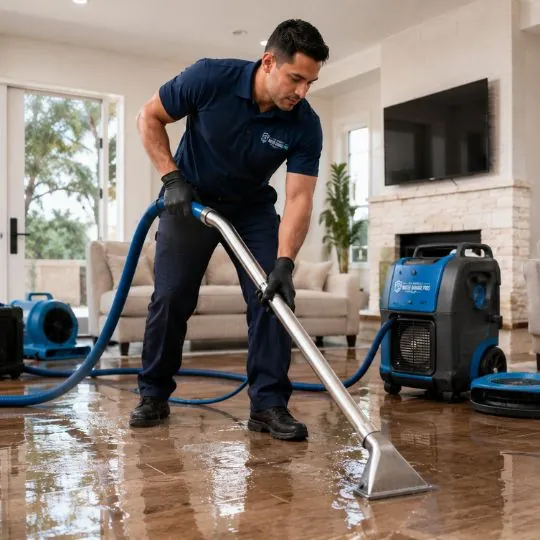
We inspect the damaged materials and identify what caused the water damage.
We check moisture levels and determine whether drying or removal is needed before repair.
When materials cannot be safely dried, we remove them and prepare the area for repair.
We outline drywall, flooring, trim, cabinet, paint, or other repair needs.
The final goal is clean, dry, safe repair work that helps return the property to pre-loss condition.