
Stop water damage spreading
Water Mitigation Service
Call us for water mitigation service in Los Angeles.
Stop water damage spreading
Call us for water mitigation service in Los Angeles.
Water mitigation is the urgent work done to stop water damage from getting worse. It includes identifying the source, removing water, protecting unaffected areas, drying wet materials, and reducing the chance of mold growth and structural damage. Mitigation is not the same as final repair. It is the critical first step that makes repair possible.
Los Angeles Water Damage provides water mitigation for homes and businesses after leaks, burst pipes, storm flooding, roof leaks, appliance failures, and water intrusion. Call us for emergency water mitigation help in Los Angeles, CA.
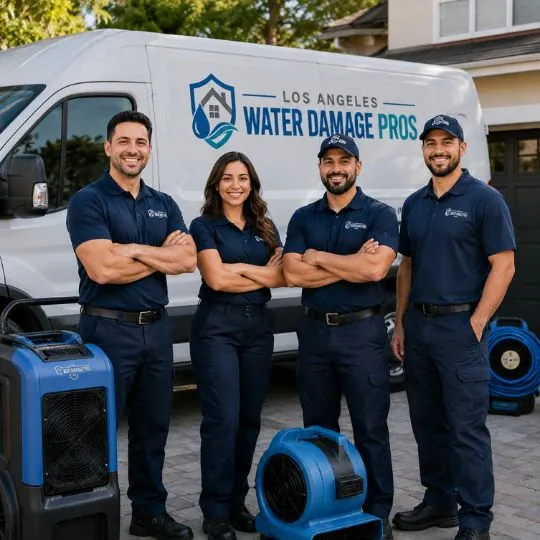
When water enters a property, time matters. Flooring absorbs moisture, drywall wicks water upward, cabinets swell, and hidden water can spread into nearby rooms. Water mitigation focuses on controlling that spread before the damage becomes more expensive. Our team begins by assessing the source of the water and the affected areas. We then use water extraction, drying equipment, dehumidification, air movers, and moisture tracking to remove excess water and dry the structure. If necessary, wet materials are removed to prevent trapped moisture and reduce mold growth risk. Mitigation also supports the claims process. Photos, moisture readings, and documentation help show what happened, what was affected, and what steps were taken to minimize damage. Good mitigation protects the building, supports the repair plan, and gives property owners a clearer path forward.
We identify the source of the water and help stop or limit continued water intrusion.
We use moisture checks to find affected areas, including hidden water behind finishes.
We remove water quickly to limit damage to flooring, walls, cabinets, and contents.
We use air movement and dehumidification to dry the structure and reduce secondary damage.
We take practical steps to prevent mold growth and protect nearby dry areas.
Mitigation is the phase that decides your total cost. It is also the phase most often done badly, because equipment pulled a day early looks the same as equipment pulled on time.
Drying is arithmetic, not intuition. A competent crew calculates the affected volume, establishes the class of loss, and places a number of air movers and dehumidifiers that follows from those figures. Then they set a target moisture content for each material, measured against a dry standard taken from an unaffected part of the same building, and they take readings every day until the target is reached.
That daily log is the single most important document the mitigation phase produces. It is what proves the structure was actually dried rather than merely left to sit, and it is what an adjuster will want to see. Ask for it at the start, not at the end.
High-velocity fans aimed along surfaces to break the boundary layer of saturated air sitting against wet material. They accelerate evaporation but do not remove water from the room.
These do the actual removal, pulling evaporated moisture out of the air and draining it away. Without enough of them, air movers simply move humid air around.
Sealing the drying area concentrates the equipment on the wet space instead of trying to dry the entire building, which shortens the timeline and reduces the number of units needed.
Injection drying for wall cavities, mat systems for hardwood, and desiccant units for plaster and dense assemblies. Class 4 losses need these rather than more fans.
Meter readings logged against the target and the dry standard. Rising or static numbers mean the plan needs adjusting, which is exactly what monitoring is for.
Drying ends when the readings say so. A crew that finishes on a fixed schedule regardless of numbers is finishing for their convenience, not yours.
Expect three to five days for a typical residential loss, longer for Class 4. The equipment is noisy, warm, and inconvenient, and that is the trade for not having a mold problem four weeks later.
| Service | Estimated Cost | Average |
|---|---|---|
| Emergency mitigation visit | $250 to $750 | $450 |
| Water extraction | $500 to $2,500 | $1,200 |
| Drying equipment setup | $750 to $3,500 | $1,800 |
| Structural drying | $1,500 to $7,500 | $3,800 |
| Large mitigation project | $5,000 to $20,000 plus | $9,500 |
Mitigation costs vary based on water volume, square footage, building materials, drying equipment required, water category, and how quickly the work begins.
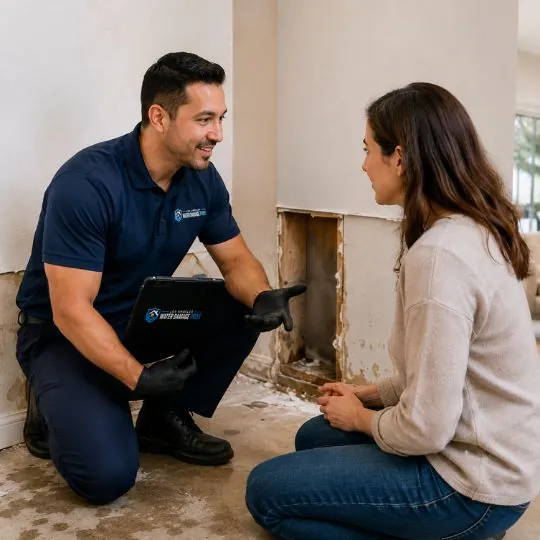
We focus on stopping the water, protecting dry areas, and reducing the spread of moisture.
We use extraction equipment, dehumidifiers, air movers, and moisture checks for a controlled drying process.
We document moisture, affected areas, and work performed so the situation is easier to understand.
Our water mitigation service is designed for urgent leaks, flooding, and emergency water situations.
The emergency phase that stops a loss getting worse: shutting off the source, extracting standing water, removing materials that cannot be saved, and installing and monitoring the drying system. It is distinct from restoration, which is the rebuild. Mitigation is about preventing additional damage; restoration is about putting things back.
Because they are different work with different timelines, and insurers generally treat them as separate components of a claim. Mitigation is urgent and often starts before an adjuster has even seen the property. Reconstruction is scheduled afterward. Keeping them separate also makes it much easier to see whether either scope has been inflated.
It depends on the affected volume and the class of loss, and it should be a calculation rather than a guess. What matters is that the crew can explain the number. A room with a dozen fans and one small dehumidifier is a common sign of a job set up to look busy rather than to dry efficiently.
The reading a material must reach before drying is considered complete, set against a dry standard measured in an unaffected part of the same building rather than against a universal figure. Framing lumber commonly targets the mid-teens by percentage. The key point is that a target exists, is written down, and is verified by meter.
Three to five days for most residential losses. Class 4 losses involving hardwood, plaster, or stone frequently run a week or more because those materials release moisture slowly. The endpoint is the readings, not the calendar, so a crew that commits to an exact number of days before starting is guessing.
Please do not. Drying is a continuous process and switching equipment off lets the moisture in the material re-equilibrate with the air, undoing part of the previous day's progress. Every interruption extends the total run time. If noise is genuinely intolerable, ask about repositioning units rather than shutting them down.
It will raise it noticeably for the days it runs, since dehumidifiers and air movers draw meaningful power continuously. For a typical residential loss the additional cost is usually modest relative to the job. On insurance claims, the power used by drying equipment is sometimes a recoverable item, so keep the bill and ask.
That means something is wrong with the plan, and it is why monitoring exists. Common causes are a trapped pocket of water behind a finish, insufficient dehumidification for the volume, a cavity that needs injection drying, or a source that was never fully stopped. The response is adjusting the system, not extending the same setup another week.
For emergency water mitigation in Los Angeles, call Los Angeles Water Damage.
Quick, simple, and no obligation
Call us and we will help you take the first safe steps while service is arranged.
We inspect the damage, protect unaffected areas, and identify safety concerns.
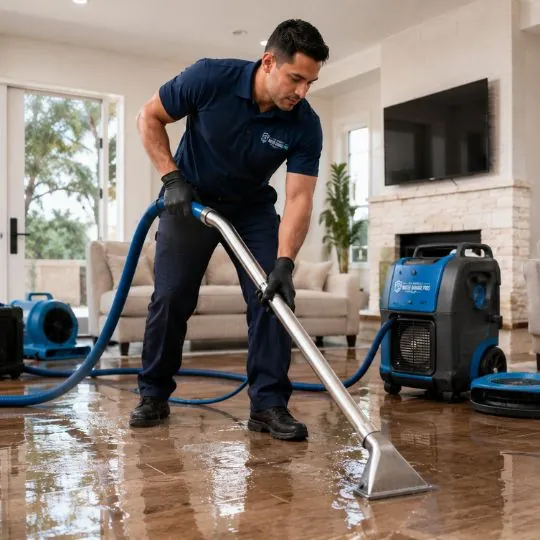
We extract standing water and remove excess water from affected areas.
We set drying equipment and check moisture until materials reach acceptable levels.
Once mitigation is complete, we explain cleanup, repair, and property restoration needs.