
Cleanup after water damage
Water Damage Cleanup
Call (213) 768-8161 for water damage cleanup in Los Angeles today.
Cleanup after water damage
Call (213) 768-8161 for water damage cleanup in Los Angeles today.
Water damage cleanup is about more than removing visible water. A proper cleanup handles wet materials, odors, contamination concerns, moisture, debris, and the hidden areas where water can remain after flooding or a leak. The sooner cleanup starts, the easier it is to minimize damage and protect the building.
Los Angeles Water Damage provides cleanup after burst pipes, appliance overflows, ceiling leaks, roof leaks, storm water, and flood damage. Call (213) 768-8161 for prompt cleanup service and practical guidance on what should be dried, cleaned, removed, or repaired.
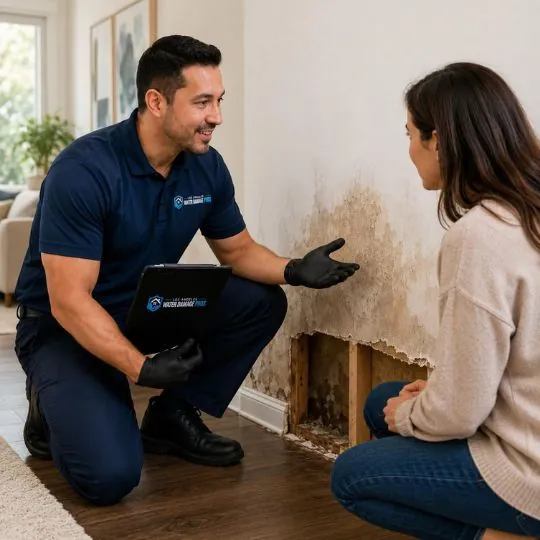
When water spreads through a property, affected areas may include carpet, pad, drywall, baseboards, furniture, cabinets, insulation, and personal belongings. Our cleanup process begins with safety and source control. We look for electrical risks, contamination, wet materials, and hidden water that can keep the space damp. Next, we remove standing water and wet debris when needed. Water extraction is followed by dehumidification, air movement, and sanitation so the property can dry safely. If the water is contaminated, such as sewage cleanup or dirty flood water, the cleanup process requires more caution, protective equipment, and disinfection. We also consider contents and sensitive items. Some belongings may be cleaned and dried, while others may not be safe to keep. In certain cases, document restoration or electronics restoration may be discussed as part of a larger recovery plan. Our goal is to make the cleanup organized and less overwhelming.
We remove standing water and begin the drying process before damage spreads farther.
Soaked carpet pad, damaged drywall, insulation, and debris may need removal for safe drying.
We clean and treat affected areas based on the source of the water and contamination risk.
Moisture can cause odors, so we address damp materials and the conditions that create smells.
We help identify belongings that may be dried, cleaned, documented, or discarded.
The cleanup phase is where most of the disputes happen, because it is where things get thrown away. Knowing the rule in advance removes most of the argument.
The rule is porosity plus contamination. A non-porous item hit by clean water almost always cleans up. A porous item hit by Category 3 water almost never does. Everything else sits between those poles, and the honest answer is often that it depends on how long it stayed wet.
| Item | Clean water | Grey water | Black water |
|---|---|---|---|
| Hard furniture, sealed surfaces | Clean and dry | Clean and sanitise | Clean, sanitise, assess |
| Upholstered furniture | Often salvageable | Case by case | Discard |
| Mattresses | Case by case | Discard | Discard |
| Clothing and washable textiles | Launder | Launder hot | Specialist cleaning or discard |
| Carpet | Often dried in place | Usually discard | Discard |
| Carpet pad | Usually discard | Discard | Discard |
| Paper, books, documents | Freeze-dry or discard | Discard | Discard |
| Electronics | Specialist assessment | Specialist assessment | Discard |
Cross-contamination is the quiet failure mode of this phase. Carrying wet material through dry rooms, running an air mover pointed out of a contaminated space, or leaving the building's air system running during cleanup all spread the problem into areas that were previously fine. Containment goes up before removal starts, and the air handling serving the affected zone gets shut down with registers sealed.
The air system deserves its own attention afterward. If it ran while contaminated air was circulating, or if water reached ductwork, inspection is warranted. Flexible duct with wet lining generally gets replaced rather than cleaned, because the interior surface cannot be restored reliably.
| Service | Estimated Cost | Average |
|---|---|---|
| Small cleanup area | $500 to $1,500 | $950 |
| Water extraction and cleanup | $1,000 to $4,500 | $2,200 |
| Drying and sanitation | $1,200 to $6,000 | $3,000 |
| Contaminated water cleanup | $2,000 to $10,000 plus | $5,000 |
| Large property cleanup | $5,000 to $25,000 plus | $11,000 |
Cleanup pricing depends on square footage, water category, standing water depth, affected materials, disposal needs, drying time, and whether mold growth is present.
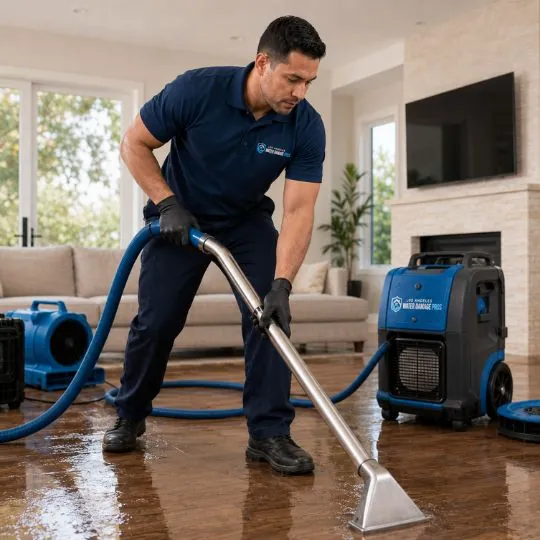
We clean the space while also addressing hidden moisture that can cause later problems.
We help determine what can be cleaned, what can be dried, and what should be removed.
Fast cleanup helps reduce odors, staining, mold risk, and damage to surrounding materials.
We work carefully around belongings, finishes, tenants, customers, and neighbors.
Porosity and contamination. Non-porous items hit by clean water clean up. Porous items exposed to sewage do not, regardless of value. In between, time is the deciding factor: the same upholstered chair may be salvageable after four hours and a write-off after three days. Photograph everything before it goes, because that documentation is what supports the contents portion of a claim.
An applied product intended to inhibit microbial growth on surfaces after cleaning. It is genuinely useful on Category 2 and 3 losses as part of a process that also includes physical removal and cleaning. It is not a substitute for removing contaminated material, and on a clean-water loss that was dried promptly it usually adds little beyond cost.
It is treated as a biohazard. Porous material in the affected area comes out regardless of appearance, workers wear appropriate protection, the area is contained, and surfaces are cleaned then disinfected rather than simply dried. Category 3 losses also generally require the affected zone to be sealed off from the rest of the building throughout.
For a contained clean-water loss, usually not. For sewage or extensive contamination, leaving is strongly advisable while removal and disinfection are underway, particularly if anyone in the household is elderly, pregnant, immunocompromised, or asthmatic. If the loss took out the only bathroom or kitchen, the decision usually makes itself.
Undamaged contents are typically moved out of the work area or blocked up off the floor and covered. Salvageable damaged items may be cleaned on site or sent out for specialist work. Anything discarded should be photographed and inventoried first. Ask specifically who is responsible for the inventory, because that list becomes the contents claim.
Containment before removal starts, negative air pressure in the work zone where contamination is involved, sealed routes for carrying material out, and shutting down the air system serving the area with registers covered. The common mistake is setting fans that push air from the wet zone into clean parts of the building.
If it ran during the loss, or if water reached any part of the system, yes. Ductwork can hold moisture and distribute contamination throughout the building. Flexible duct with a wet interior lining is generally replaced rather than cleaned, since that surface cannot be reliably restored. Rigid duct can often be cleaned.
Clean water caught within roughly a day often allows carpet to be dried in place, though the pad underneath usually comes out regardless because it acts as a reservoir. Grey water usually means removal. Black water always does. Carpet that has been wet more than about 48 hours is generally not worth the risk whatever the source.
For water damage cleanup in Los Angeles, call Los Angeles Water Damage at (213) 768-8161 today.
Quick, simple, and no obligation
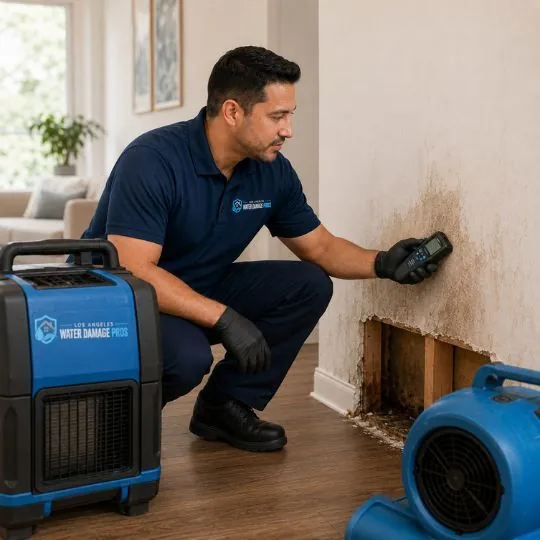
We identify the water source, affected areas, contamination level, and immediate safety concerns.
We remove water, wet debris, and materials that cannot be safely dried.
We clean affected surfaces and apply appropriate sanitation steps based on the situation.
We use drying equipment and monitor moisture until the area is ready for repairs.
We explain repair needs, documentation, and practical steps to restore your property.